















During an election campaign, politics is a battle of language and emotion. Slogans are crafted to be short, punchy, and memorable: “A New Dawn,” “Renewed Hope,” “Power to the People,” or “Jobs for Every Youth.”
Pillars of sound policy are compressed into ten-word chants that fit onto billboards, campaign caps, and 15-second social media videos. Candidates deliver sweeping speeches promising to revive the economy, build world-class highways, wipe out insecurity in six months, and eliminate youth unemployment.
It is easy to get caught up in the energy of a rally or the charisma of an orator. However, winning an election and running a government are two completely different disciplines.
A slogan is an advertising tool; a policy is a legal and administrative commitment. Once a candidate takes the oath of office, broad promises face the unyielding realities of national budgets, constitutional boundaries, legislative negotiations, and civil service bureaucracy.
Learning how to read a campaign pledge beyond its marketing hook is one of the most powerful skills any citizen can develop. You do not need a degree in public administration or economics to evaluate a manifesto. You only need to ask four fundamental questions.
1. What Exactly Is Being Proposed—and Is It Legally Feasible?
The first test of any campaign pledge is clarity: Does the candidate describe a concrete mechanism, or are they merely naming a desirable outcome?
There is a vast difference between an aspiration and an actionable policy:
- The Aspiration: “We will end youth unemployment and make our nation an industrial powerhouse.” Everyone agrees this is a worthy goal, but it explains nothing about how it will actually happen.
- The Actionable Proposal: “We will establish an vocational apprenticeship tax rebate for registered small businesses and allocate ₦50 billion to low-interest manufacturing loans.”
Beyond clarity, ask whether the candidate’s office actually has the legal power to deliver it. In presidential democracies across West and East Africa, executive power is limited by constitutional checks and balances.
A presidential candidate cannot unilaterally alter tax rates, dissolve statutory regulatory commissions, or overhaul the judicial system by decree—those reforms require passing legislation through a national assembly or amending the constitution. If a candidate promises sweeping legal transformations without acknowledging the parliamentary coalition required to pass them, the pledge is often hollow rhetoric.
2. Who Holds Statutory Responsibility?
As highlighted in civic governance frameworks, public services are distributed across different tiers of government. A common campaign trick is taking credit for popular issues outside the candidate’s statutory jurisdiction.
- Federal vs Local Realities: A candidate running for a federal legislative seat cannot independently build municipal drainage culverts, install streetlights, or fix community primary schools; their statutory role is passing federal legislation, screening appointments, and conducting committee oversight.
- Overlapping Jurisdictions: Similarly, a governor promising to unilaterally reform central monetary policy or deploy the armed forces is promising actions that rest exclusively within the constitutional authority of the federal executive.
When reading a pledge, verify that the promise matches the constitutional job description of the office the candidate seeks.
3. Where Are the Funding and the Resources Coming From?
Every ambitious public project comes with a financial cost. Any politician who promises major public investments without identifying a realistic revenue source is dodging the hardest part of governance.
When evaluating major infrastructure, subsidy, or welfare pledges, examine the fiscal plan:
- Taxation vs Borrowing: Is the candidate proposing to fund new programmes by increasing corporate or sales taxes, broadening the tax base, or securing domestic and foreign commercial loans?
- Budget Reallocation: If the candidate claims they will fund new initiatives by “cutting waste,” look closely at the numbers. Eliminating administrative inefficiency is necessary, but it rarely produces enough immediate liquidity to fund trillion-naira rail networks or free universal healthcare schemes overnight.
- Fiscal Sustainability: In economies contending with external debt servicing, inflation, and currency volatility, promising massive spending sprees without detailing how to manage fiscal deficits often leads to abandoned projects once in office.
If a manifesto fails to detail where the money will come from, the policy is usually a wish list, not a plan.
4. What Is the Timeline, and How Is Success Measured?
A promise without a timeline cannot be held accountable. Unscrupulous politicians thrive on vague promises because they can claim progress indefinitely without ever delivering measurable results.
Look for specific, time-bound indicators:
- Clear Milestones: Did the candidate pledge to deliver 10,000 megawatts of electricity within their first twenty-four months, or did they vaguely promise to “significantly improve power supply”?
- Independent Data: How will citizens verify that the promise was fulfilled? Reliable manifestos point to measurable benchmarks—such as pupil-to-teacher ratios, kilometers of paved road certified by independent engineers, or formal employment figures tracked by national statistical bureaus.
- Progress Tracking: Clear commitments allow civil society organizations, independent fact-checkers, and community journalists to build post-election tracking scorecards (such as Africa Check’s Promise Tracker or civic-tech governance dashboards) that monitor delivery year after year.
Practical Questions to Ask at the Next Town Hall
When attending a political debate, community town hall, or reviewing an official manifesto, use these direct questions to evaluate candidates of any political party:

| Vague Campaign Slogan | The Practical Question to Ask |
| “We will fix the healthcare system.” | “What percentage of the annual budget will you allocate to primary health centres, and how many doctors will be recruited in Year 1?” |
| “We will create millions of jobs for the youth.” | “Which specific sectors will receive targeted investment, and what policy incentives will private employers receive to hire?” |
| “We will stamp out corruption completely.” | “What concrete legislative amendments will you submit to strengthen the autonomy and funding of anti-graft agencies?” |
| “We will build modern transit networks.” | “What is the projected capital cost, how will it be financed, and which agency will oversee construction?” |
Moving From Passion to Informed Scrutiny
Elections inevitably stir genuine hope and passion. There is nothing wrong with feeling inspired by a vision of a better, more prosperous society.
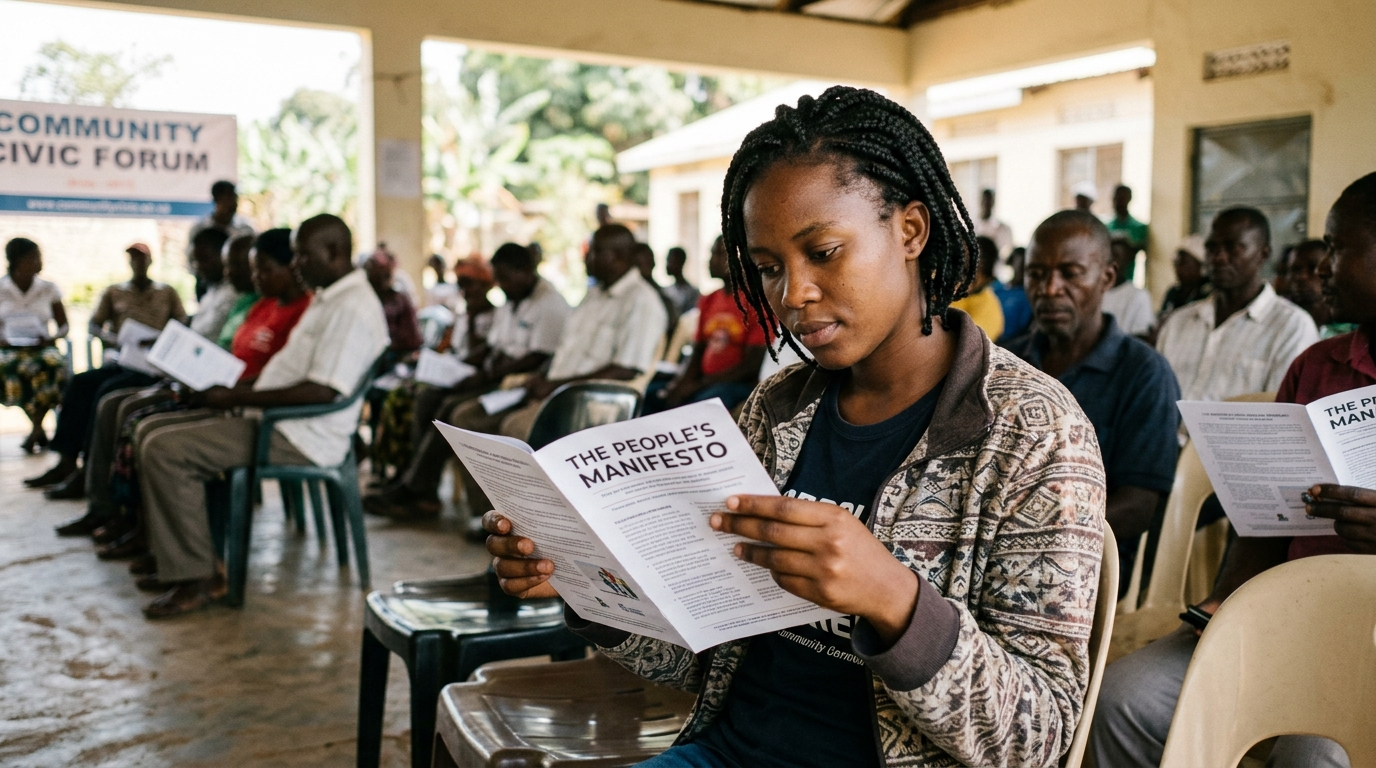
However, democracy functions best when inspirational vision is anchored by rigorous public scrutiny. By demanding that politicians provide detailed budgets, legal roadmaps, realistic timelines, and measurable targets, citizens ensure that campaign manifestos become binding blueprints for development—rather than forgotten slogans discarded the day after the election.